

Flat and low-slope commercial roofs fail differently than residential pitched roofs — and they require different systems, different installation methods, and a contractor who understands the distinctions.
We've been doing commercial roofing on Long Island alongside our residential work since 1999. We understand the operational demands of commercial properties — minimizing disruption to your business, managing large crews efficiently, coordinating around occupied buildings, and delivering documented work that satisfies property managers and building owners.
Whether it's a 2,000 sq ft retail storefront or a 50,000 sq ft industrial facility, we bring the same level of preparation, coordination, and accountability to every commercial job.
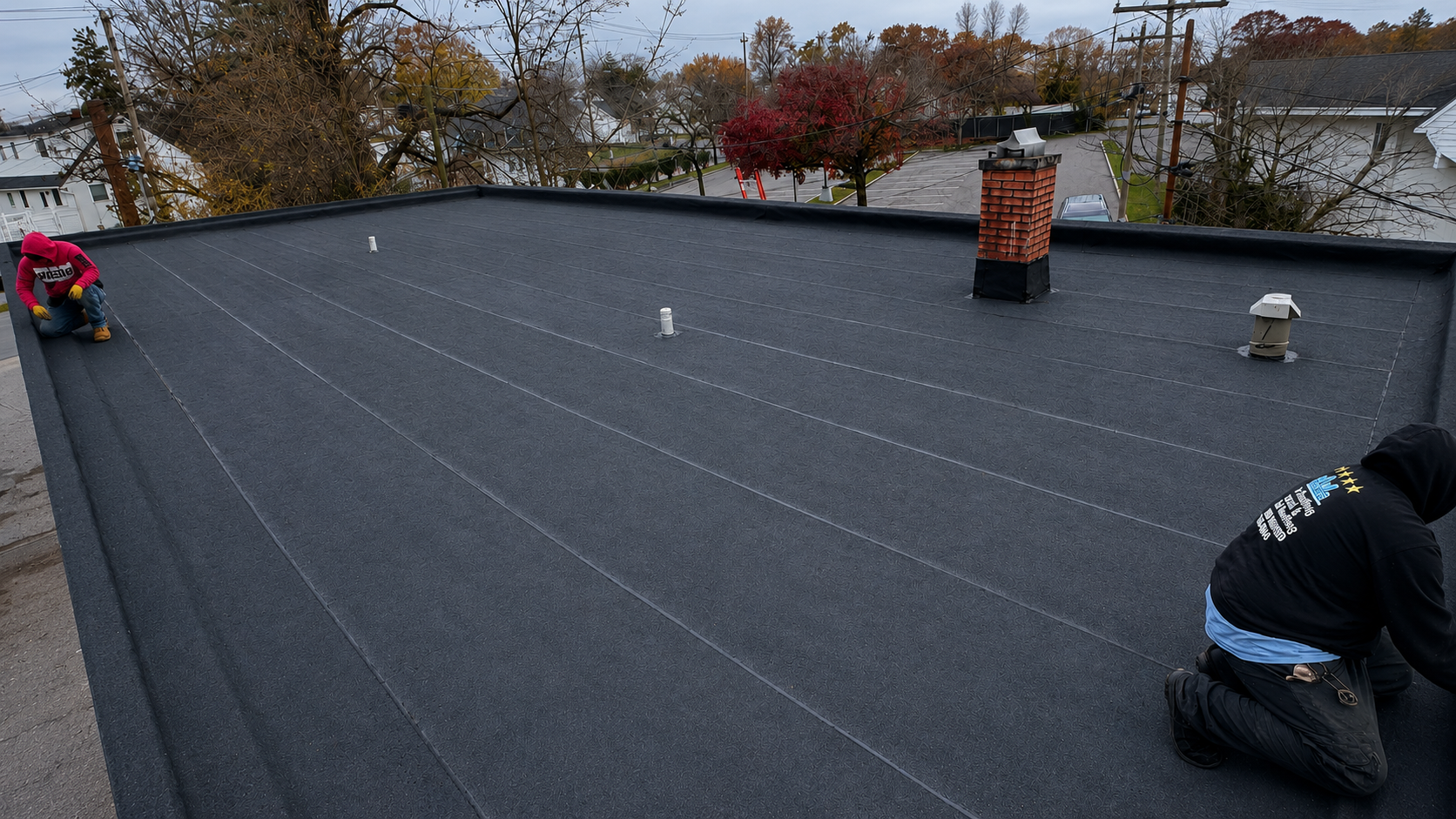
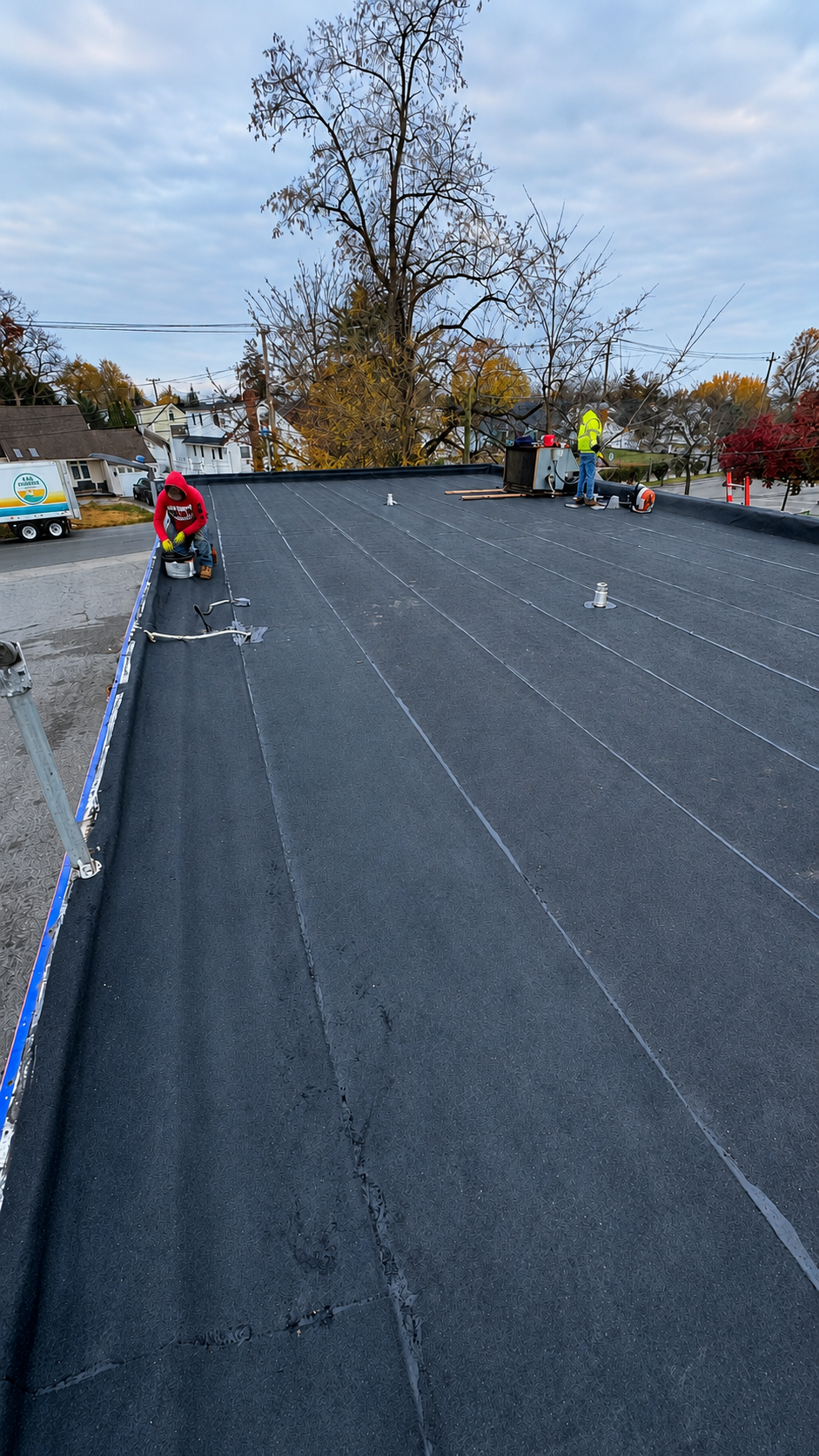
Complete commercial roofing from single-story retail to large industrial complexes.
Thermoplastic polyolefin membrane — the industry's leading choice for commercial flat and low-slope roofs. Energy-efficient, heat-weldable seams, excellent long-term performance.
Get a QuoteProven, cost-effective rubber membrane — highly resistant to UV, weathering, and temperature extremes. Fully adhered and ballasted systems available.
Get a QuoteMulti-ply systems for maximum puncture resistance and redundant waterproofing layers. Ideal for high-traffic roofs with mechanical equipment.
Get a QuoteStanding seam and exposed fastener metal roofing for commercial and industrial buildings. 40–70 year lifespans, outstanding wind resistance, minimal maintenance.
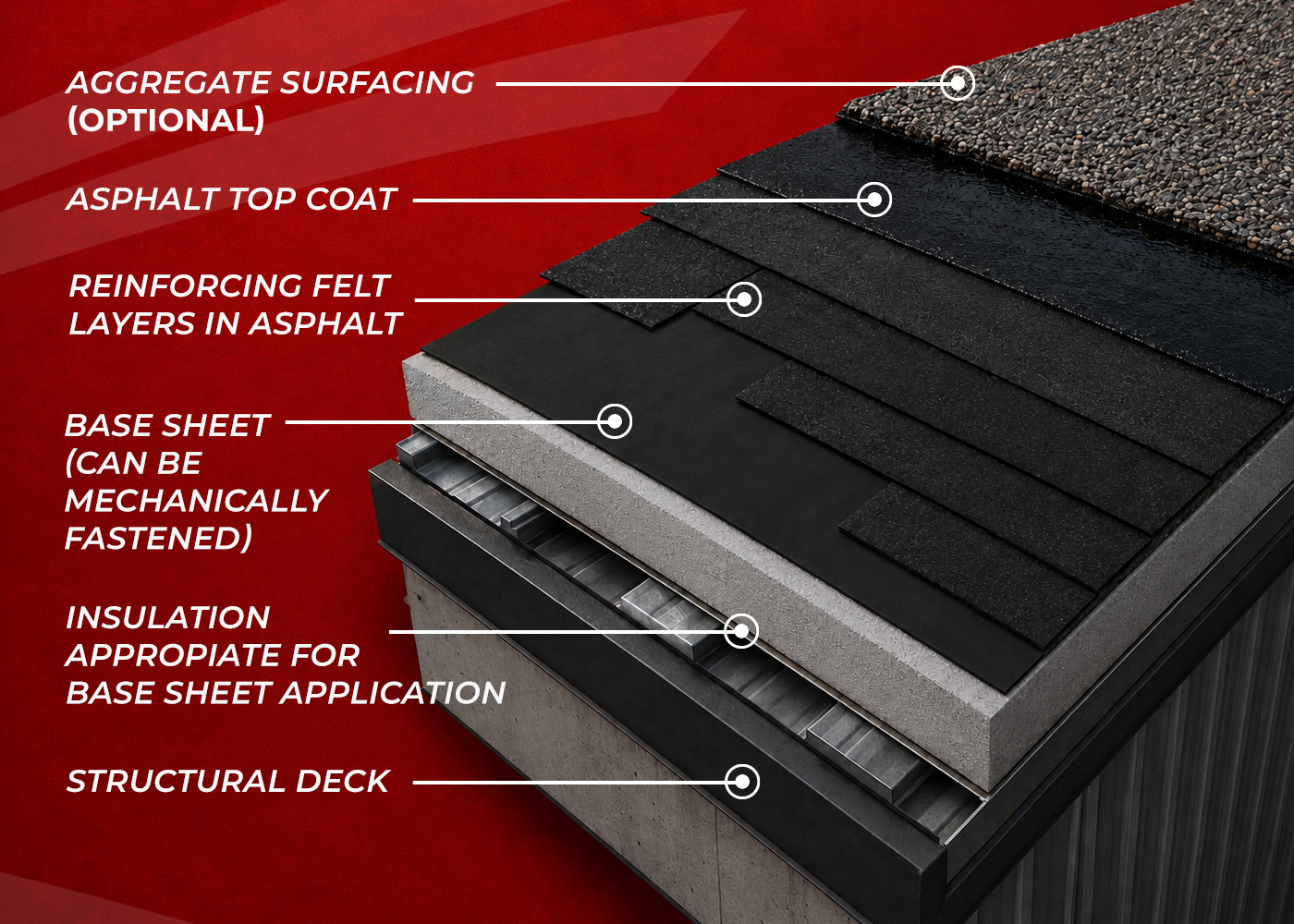
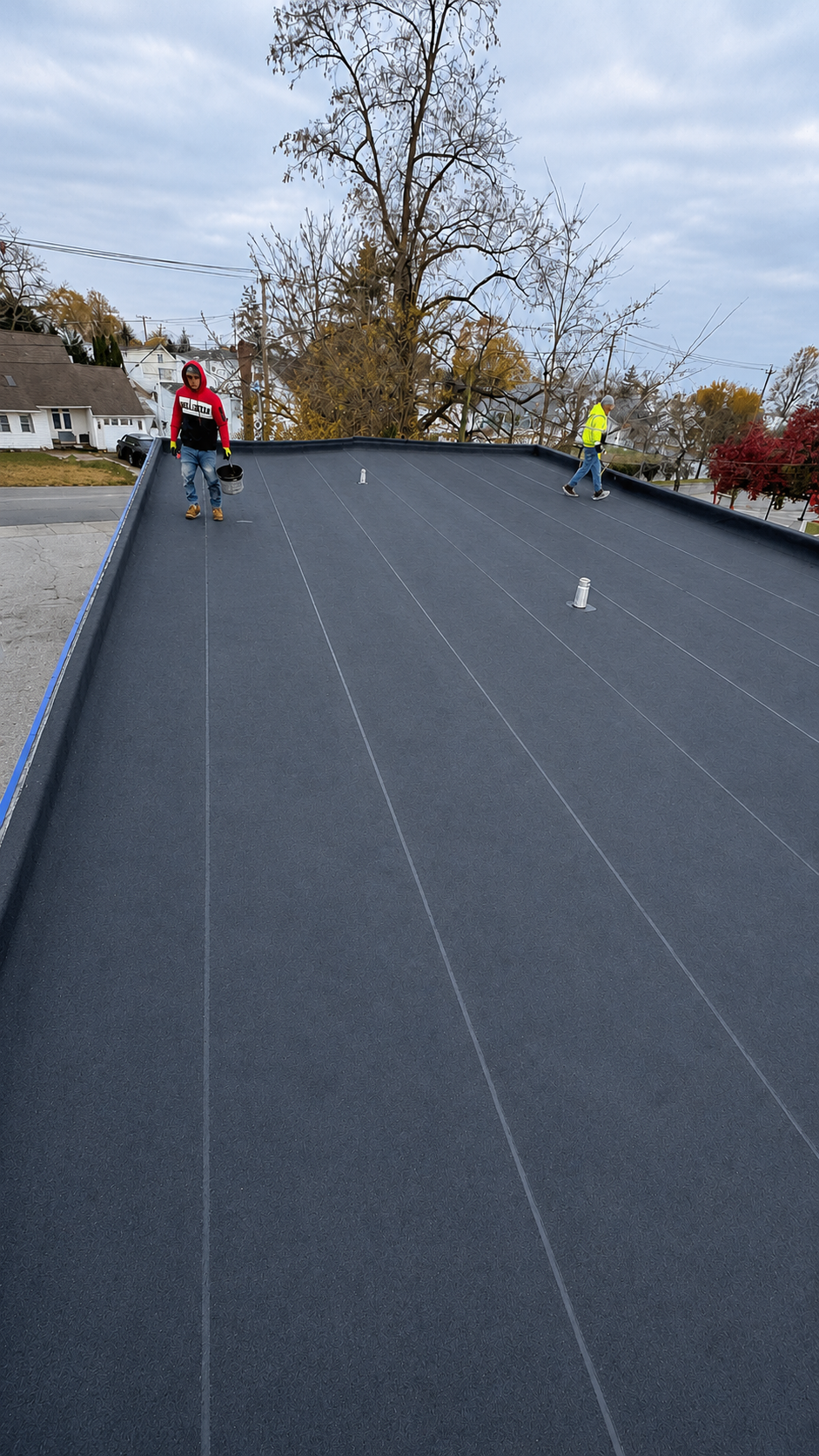
Get a QuoteModified bitumen torch-applied systems — superior adhesion, puncture resistance, and long-term waterproofing for low-slope commercial and flat residential roofs.
Get a Quote24/7 emergency response for commercial clients. Active leak in your building? We have crews on call that respond to commercial properties across Long Island any time of day.
Call NowThe right system depends on your roof geometry, foot traffic, drainage, and budget. Here's an honest breakdown of how the major flat roofing systems compare.
TPO is now the most widely specified commercial flat roofing membrane in the country. It combines energy efficiency, exceptional seam strength, and long-term durability into one system.
The defining advantage of TPO over other single-ply membranes is the heat-welded seam. Rather than relying on adhesive bonding that degrades over time, TPO seams are welded with hot air — creating a bond that is actually stronger than the membrane itself. That's why properly installed TPO roofs rarely fail at the seams, which is where most flat roofs eventually fail.
The average commercial roof failure caught during routine maintenance costs $300–$800 to repair. Left unchecked for a year or two, the same issue can cost $15,000–$50,000 in membrane replacement and interior damage.
Our maintenance programs include scheduled semi-annual inspections, drain clearing, membrane and flashing assessment, minor repairs on the spot, and a written report after each visit. Property managers always have full documentation of the roof's condition and maintenance history.
Spring and fall visits to catch seasonal damage early
Clogged drains cause ponding water — the #1 flat roof killer
Seam checks, blister detection, puncture identification
Full documentation after each visit — condition, repairs made, recommendations
Small repairs handled during scheduled visits at no extra charge
Maintenance clients get first priority on emergency calls
Commercial roofing requires more planning, tighter coordination, and better documentation than residential work. Here's our process.
We assess your existing system type, condition, insulation R-value, drainage patterns, penetrations, and structural considerations. We recommend a system that matches your building's requirements, budget, and expected service life — in writing before any proposal is issued.
Our commercial proposals include full system specifications, installation method, membrane manufacturer and product, thickness, insulation R-value, warranty tier, and a phased timeline. Property managers and owners get documentation they can act on — not a vague one-page estimate.
Before work begins, we create a sequenced installation plan that minimizes impact on your operations — controlling noise during sensitive hours, managing debris containment, and keeping all access points clear. We work around your schedule, not the other way around.
A dedicated project supervisor manages the crew daily and provides end-of-day progress updates to the property manager. Any unexpected conditions are communicated immediately with documentation and cost impact — before any additional work proceeds.
For warranted systems, we coordinate the manufacturer's inspection, register the warranty in the building owner's name, and deliver the full warranty documentation package. You get warranty docs, as-built drawings, and our direct contact for the life of the roof.
"We manage six commercial properties on Long Island and J. Great handles roofing for all of them. What sets them apart is the communication — daily updates during projects, written reports after every maintenance visit, and they respond to emergency calls faster than any contractor we've ever used."
"Our 18,000 sq ft facility needed a full TPO replacement. J. Great's proposal was the most detailed we received — system spec, installation method, warranty documentation, and a phased schedule that kept us operational throughout. Work was done on time, on budget, and the documentation package satisfied our property insurer completely."
Questions property owners and managers ask us most.
This is the first conversation we have on every commercial job. We develop a sequenced installation plan that maintains coverage over occupied areas, schedules loud phases around your operating hours, manages all debris containment, and keeps loading dock, entrance, and parking access clear throughout the project. We've replaced roofs on occupied retail stores, medical offices, and industrial facilities — minimizing disruption is planned from day one, not an afterthought.
Commercial roof warranties depend on the system and manufacturer. TPO and EPDM systems typically carry manufacturer warranties of 10–20 years on materials, with labor warranties available through the installer. Some manufacturers offer NDL (No Dollar Limit) warranties covering all repair costs — available when we use specified manufacturers and installation methods. We'll detail specific warranty options in every commercial proposal.
Twice a year — spring and fall — is the standard for most commercial flat roofing systems. Spring inspection catches winter damage; fall inspection prepares for snow and ice loads. Also inspect after any major storm. Buildings with rooftop mechanical equipment or heavy foot traffic should inspect more frequently. Our maintenance programs include semi-annual visits as the baseline.
A rule of thumb: if repair costs exceed 25–30% of replacement cost, replacement typically delivers better value over the next 5–10 years. Other replacement indicators: membrane over 20 years old, systemic failures across multiple areas, significantly wet insulation (detectable via infrared scan), or repeated repairs without lasting results. We'll give you an honest repair vs. replace analysis — we don't push replacements when repairs make more sense.
Yes. We work with property management companies managing multiple buildings across Long Island. Multi-property contracts include consolidated scheduling, single-point invoicing, and priority emergency response across all covered properties. If you manage more than two commercial properties, ask us about our portfolio maintenance program.
Yes. We hold all required New York State contractor licenses for commercial roofing and carry commercial-scale general liability insurance and workers' compensation coverage. Certificate of insurance is provided as part of our standard contract documentation. We maintain full OSHA commercial worksite compliance on every project.