

A roof sheds water. Gutters decide where that water goes. When they fail, the damage rarely stays on the roofline — it runs down the siding, behind the fascia, and straight into the foundation.
On Long Island's South Shore, that job is harder than most people realize. A single nor'easter can dump several inches of rain in a few hours, and a mature oak or maple can bury a gutter run in leaves by mid-October. Undersized or clogged gutters overflow, and overflowing water goes exactly where you don't want it: soaking the fascia, rotting the roof deck edge, and pooling against the basement wall.
Properly sized seamless gutters with the right downspouts and guards move all of that water off the house and out to a safe discharge point. Done right, they quietly protect three of the most expensive parts of your home — the roof, the siding, and the foundation — for decades.
Gutters are only one piece. We install and repair the whole system that moves water off your roof and safely away from the house.
Formed on-site in continuous runs so the only joints are at corners and outlets. Fewer seams means fewer leaks and a cleaner line along your roof edge.
Get Free QuoteStandard 5-inch for most homes, upsized 6-inch with 3x4 downspouts for large or steep roofs. We size to your actual roof area so gutters keep up in a downpour.
Get Free QuoteCorrectly placed and pitched downspouts, with extensions or splash blocks that discharge water well away from your foundation and basement walls.
Get Free QuoteMicro-mesh and reverse-curve guards matched to your tree cover. Dramatically fewer clogs and cleanouts through Long Island's heavy leaf-drop season.
Get Free QuoteRotted fascia and damaged soffit repaired or replaced so gutters have solid backing to hang from — and your attic keeps proper ventilation.
Get Free QuoteSagging runs, pulled-away sections, split seams, and loose hangers corrected — or a full seamless replacement when patching no longer makes sense.
Schedule Repair
Gutters usually give plenty of warning before they fail outright. Catching the signs early is the difference between a straightforward replacement and repairing the damage water leaves behind.
If you're seeing several of these on your home, have the run looked at before the next heavy rain.
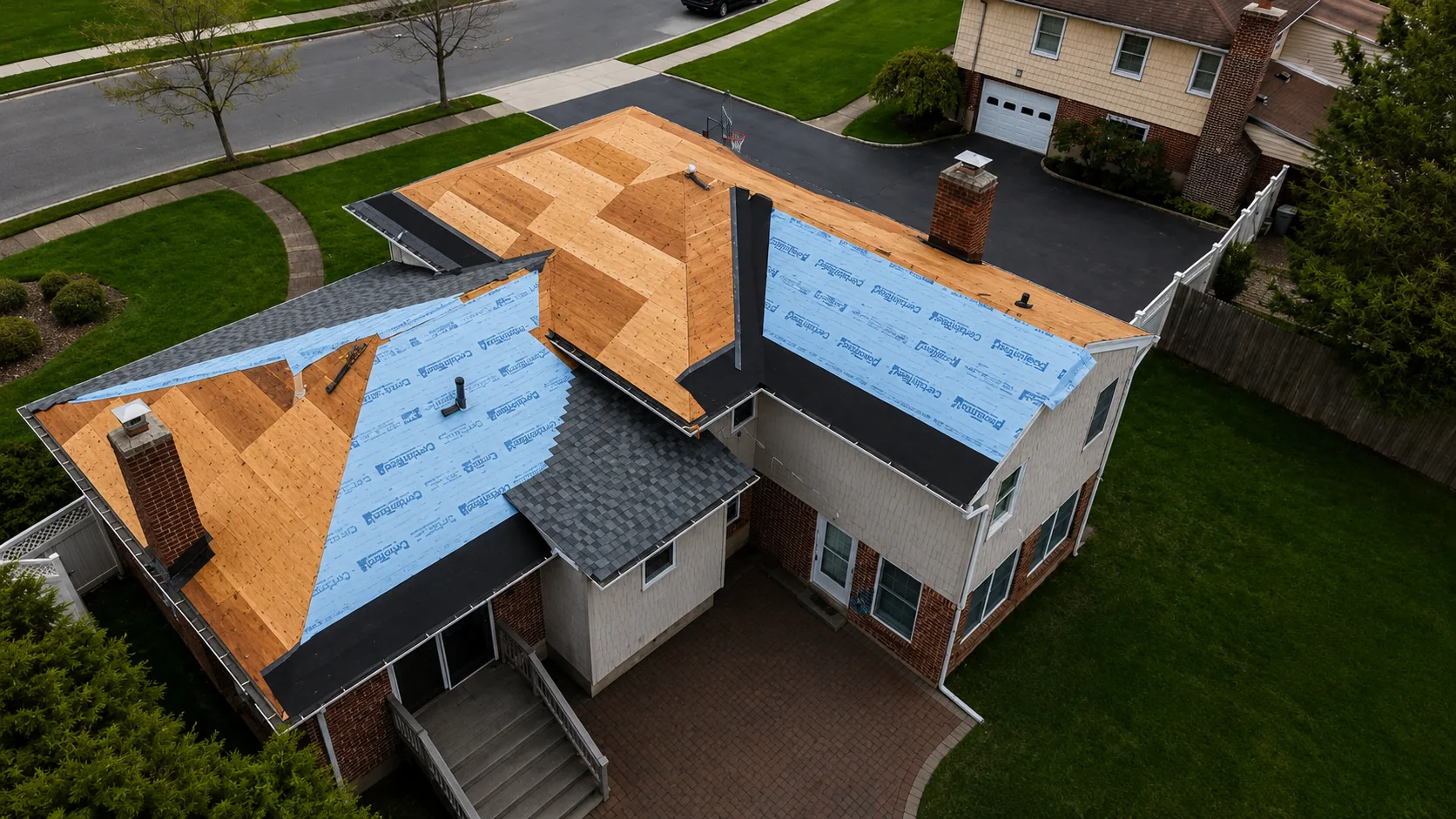
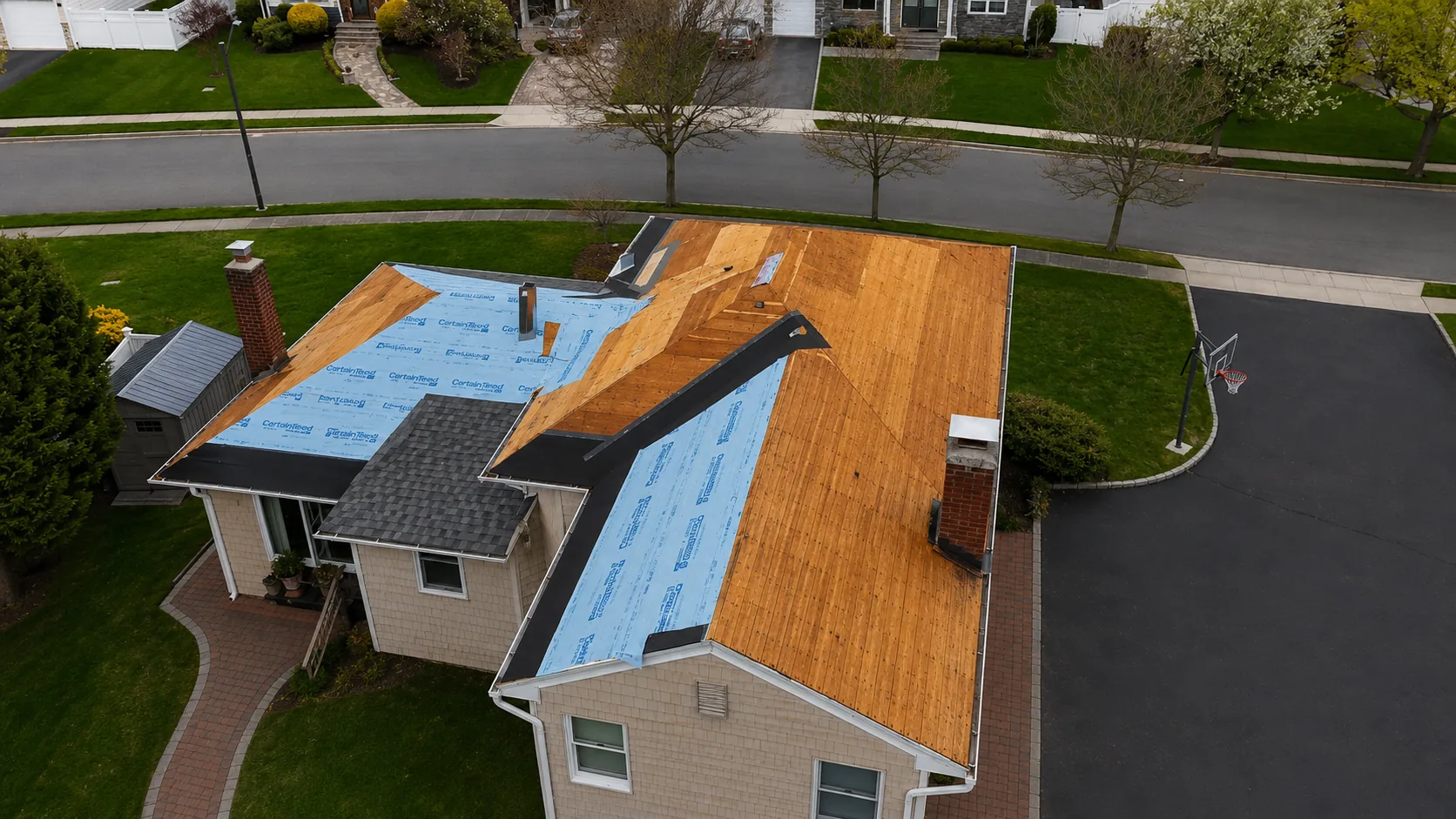
The roof edge, drip edge, and gutters are one continuous water path. The smartest time to replace gutters is while the roof is already open.
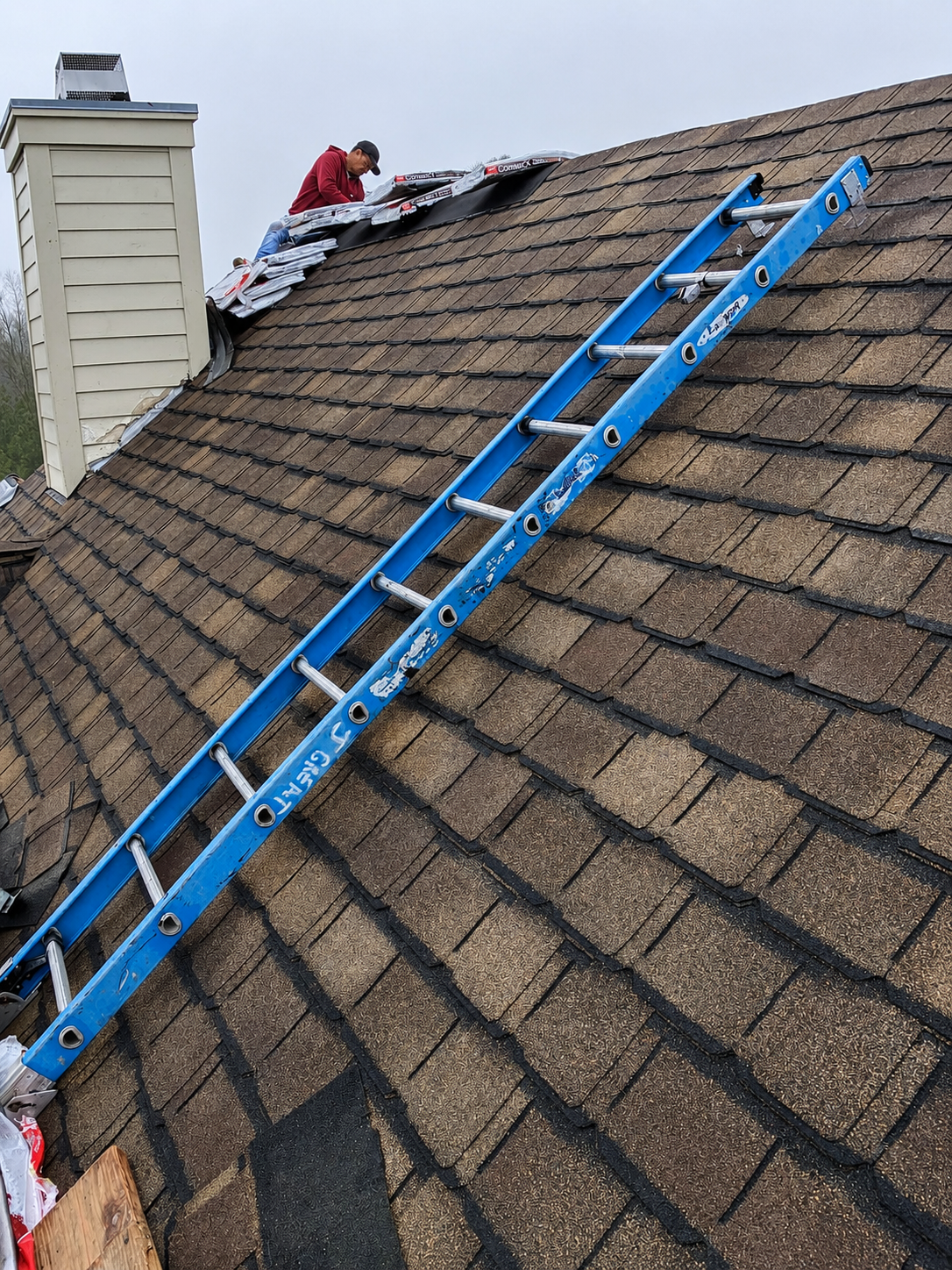
When we tear off and rebuild a roof, we install ice & water shield and drip edge along the eaves so water is directed cleanly into the gutter instead of wicking back behind it. Hanging new seamless gutters at that point means the whole system is matched, the hangers land on fresh fascia, and there's no need to disturb a finished roof later.
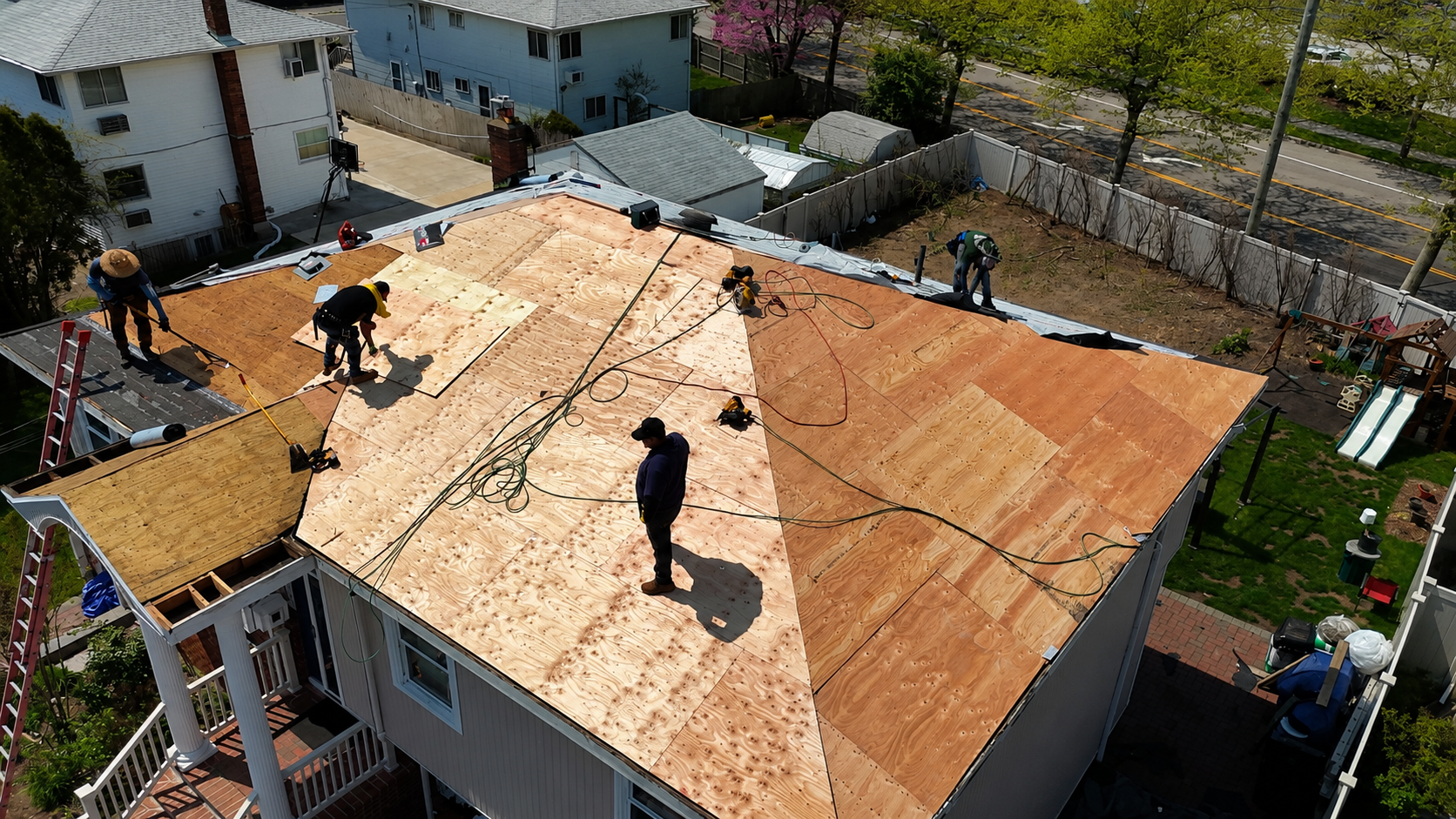
Doing both as one project also keeps your warranty clean, saves a second crew mobilization, and lets us route downspouts around new siding correctly the first time. If you're already planning a roof, adding gutters and guards is the efficient way to protect the whole exterior at once.
From Amityville to Bay Shore to Patchogue, we've seen exactly what South Shore weather does to an undersized or neglected gutter system.
Coastal Long Island hits gutters two ways: nor'easters and summer thunderstorms drop rain fast, while fall buries the run in leaves right before the wet, freezing season.
That combination is why we size gutters to your real roof area and pitch instead of defaulting to whatever fits fastest. As a full roofing and siding contractor based in West Babylon, we treat drainage as part of the whole exterior — not a bolt-on.
Anywhere on the South Shore, we'll look at the whole picture and give you a straight answer at no cost. See the towns we cover on our service areas page, or reach out for a free estimate.
Straight answers to the questions Long Island homeowners ask us most.
Most Long Island homes do fine with standard 5-inch K-style gutters. Homes with large or steep roof planes, or those that shed a lot of water fast during a downpour, benefit from 6-inch gutters, which carry roughly 40% more water and pair with wider 3x4 downspouts. During our free estimate we measure your roof area and pitch and recommend the size that will actually keep up with a heavy South Shore rainstorm.
Seamless aluminum gutters are formed on-site in one continuous run for each side of your home, so the only joints are at corners and downspout outlets. Sectional gutters have a seam every few feet, and every seam is a spot that eventually loosens, separates, and leaks. Fewer seams means fewer failure points, fewer clogs, and a cleaner look. That is why seamless is the standard we install.
Quality gutter guards dramatically cut how often you need to clean your gutters, which matters on Long Island where oak and maple leaves and pine needles pile up fast in fall. No guard is completely maintenance-free, but a well-fitted micro-mesh or reverse-curve guard keeps out leaves, seeds, and debris while letting water through. We match the guard type to your tree cover and roof style so you are not stuck clearing blockages after every storm.
Watch for sagging or pulling away from the fascia, water overflowing the front edge during rain, peeling paint or rust streaks, rotted fascia boards, and pooling water or a damp basement near the foundation. Cracks, split seams, and gutters that no longer hold their pitch are also signs. If you are seeing several of these, patching usually costs more over time than replacing the run with seamless gutters.
In most cases yes. Gutters, drip edge, and the first course of shingles all work together to move water off the roof, and it is far easier to install new gutters and guards while the roof is being done than to disturb a finished roof later. Doing both together protects your warranty, avoids a second mobilization, and makes sure the whole water-management system is matched. We handle roofing and gutters as one project so nothing falls through the cracks.